
Application UX Case Study
MS Amlin Underwriter Workbench
Redesigning the Insurance Brokerage & Underwriting Experience — transforming a complex, legacy underwriting platform into a streamlined, role-based digital workbench.
The Challenge
Underwriters were drowning in fragmented tools
MS Amlin’s underwriting teams relied on disconnected systems to manage submissions, assess risk, review documents, and track policies. The lack of a centralized platform meant underwriters spent more time navigating tools than making decisions. My challenge was to design a unified Underwriter Workbench that would consolidate all underwriting tasks into a single, intuitive application.
5+
Disconnected legacy systems
50+
Screens to design
5
User roles to support
1
Uniformed platform needed
My Role
Leading UX from discovery to developer handoff
As Lead UX Designer, I owned the end-to-end design process — from stakeholder workshops and information architecture through to a comprehensive design system and pixel-perfect prototypes. I collaborated closely with business analysts, a second UX designer, and two UX engineers.

Information Architecture
Mapping the entire application structure before a single pixel
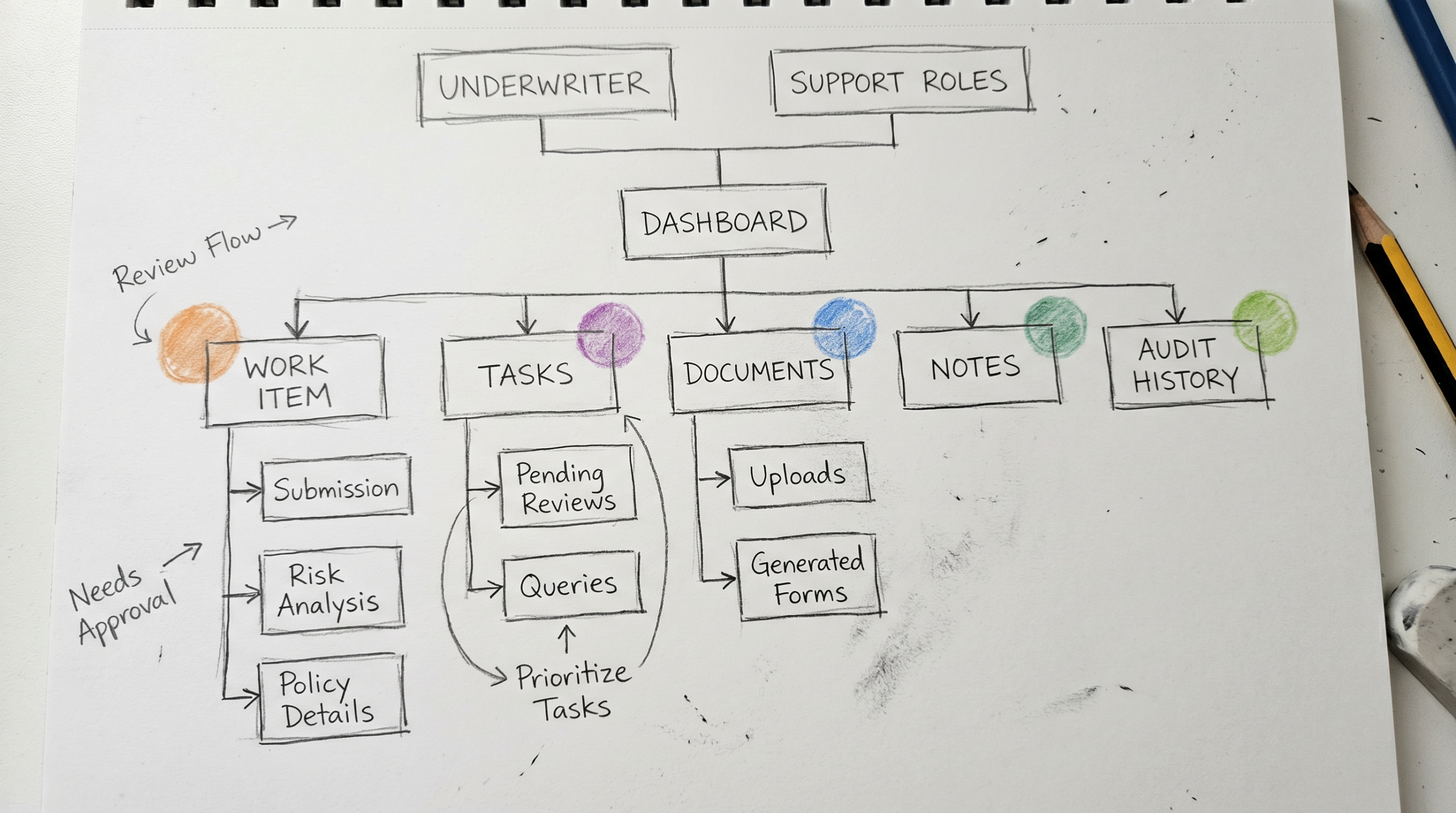
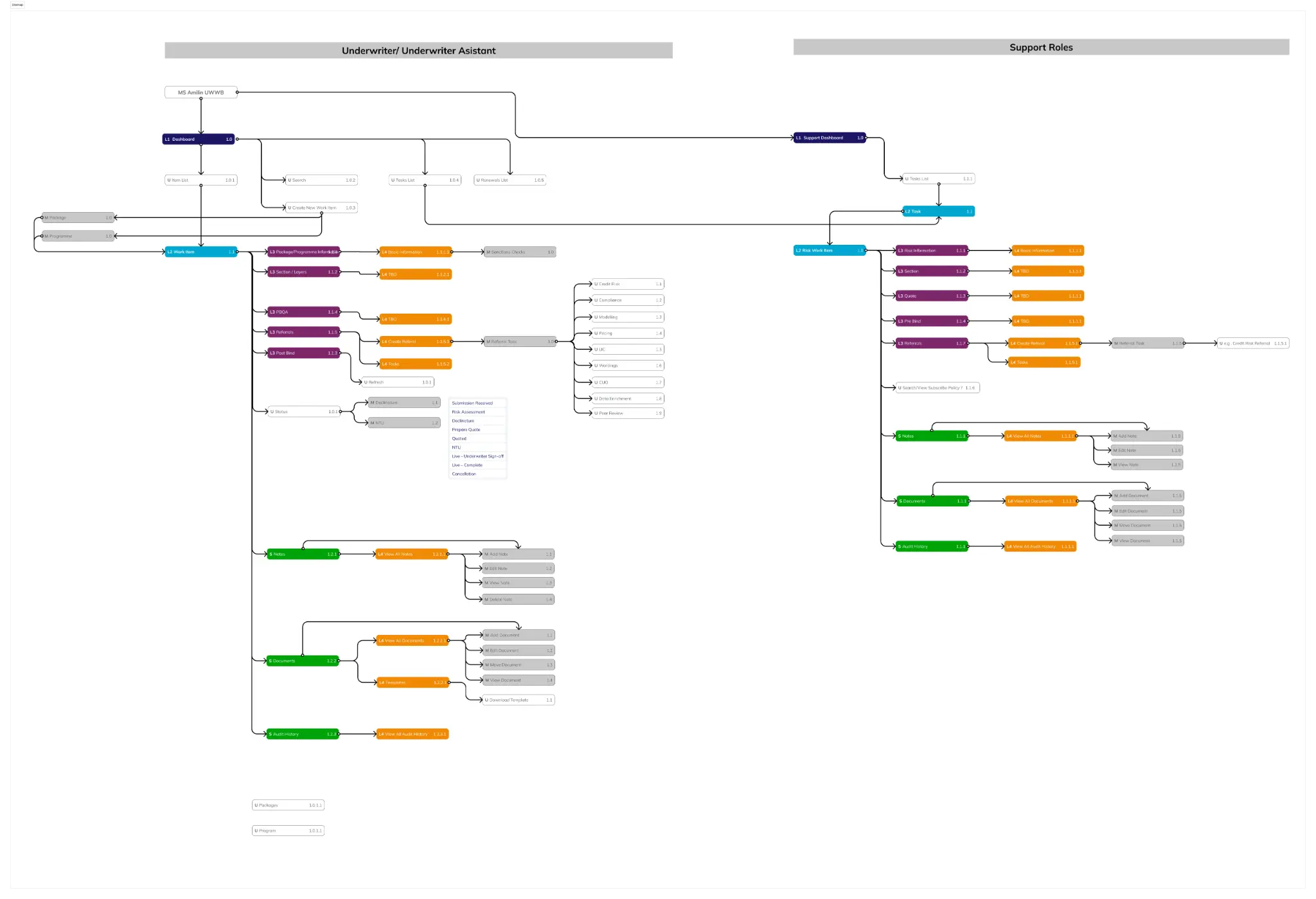
I began by creating a comprehensive sitemap that mapped every screen, user flow, and role-based pathway. This became the single source of truth — aligning business analysts, developers, and stakeholders on scope and navigation structure.
Initial Sketch
Final Sitemap
Low-Fidelity Wireframes
Starting with pencil and paper to validate structure
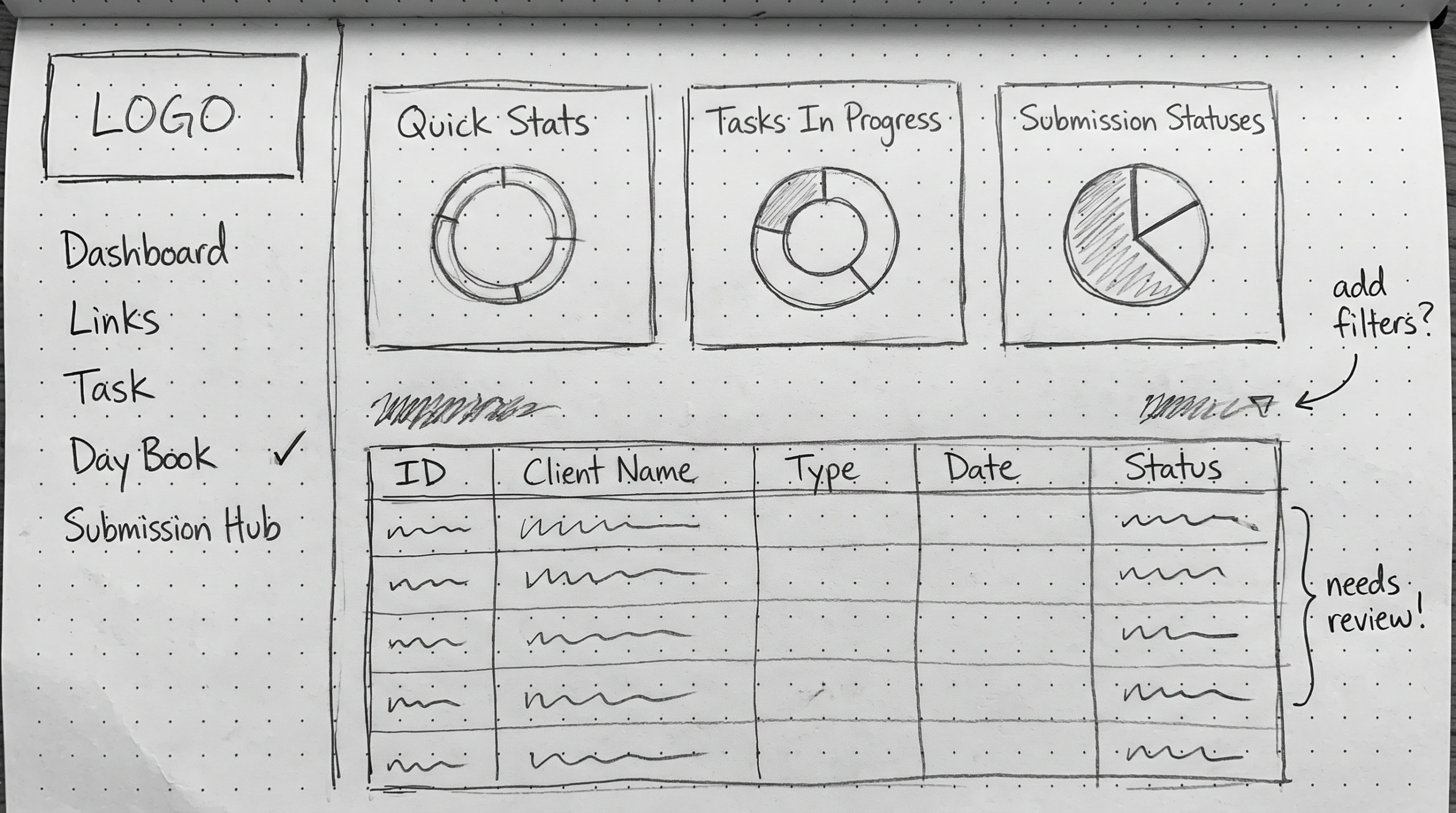
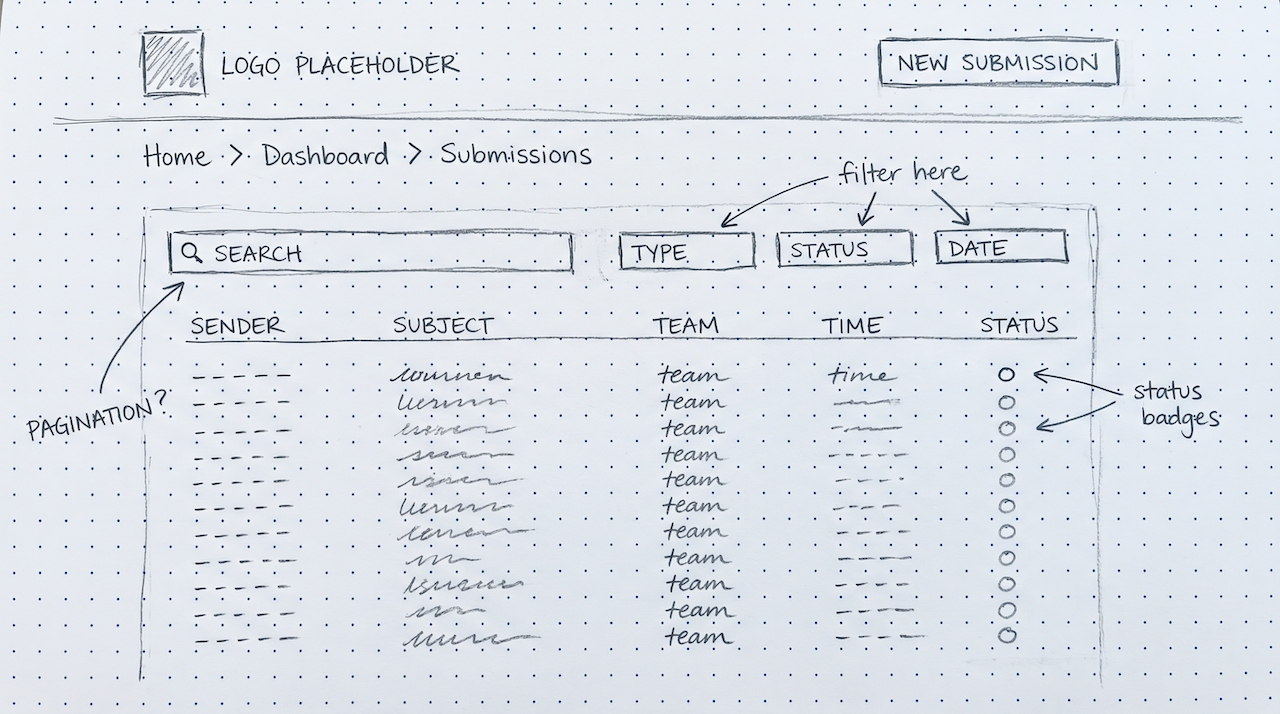
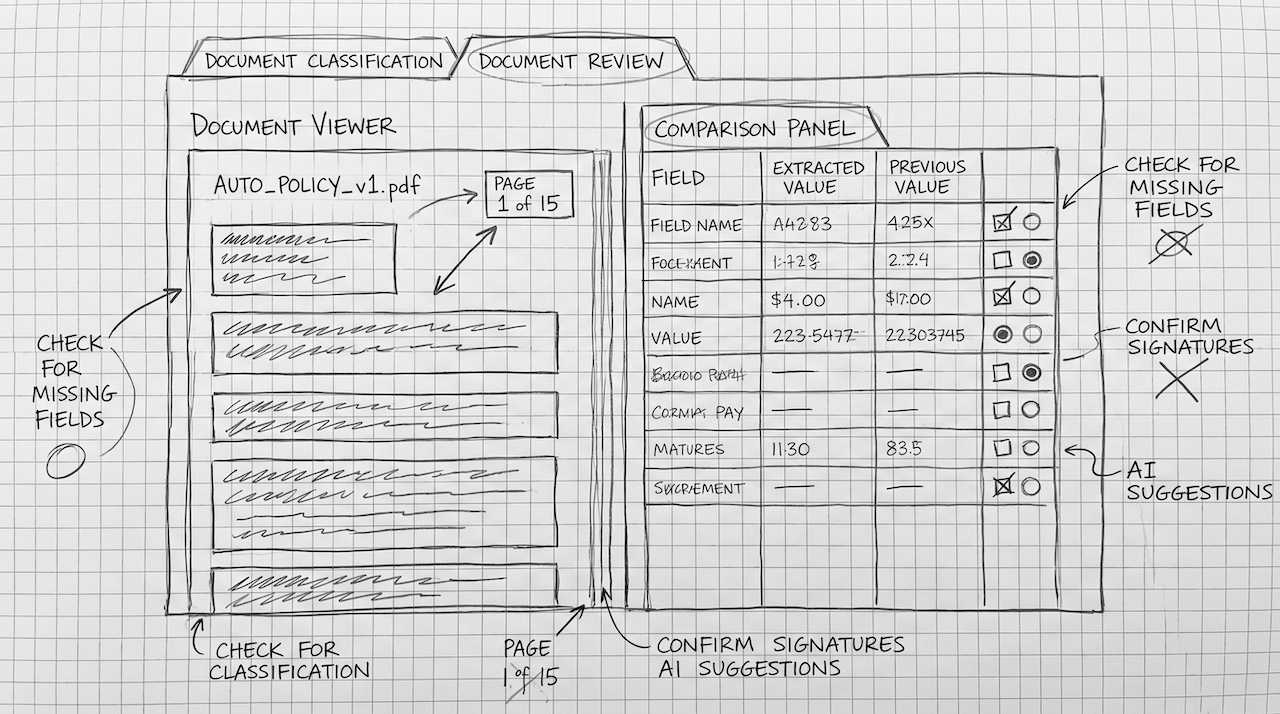
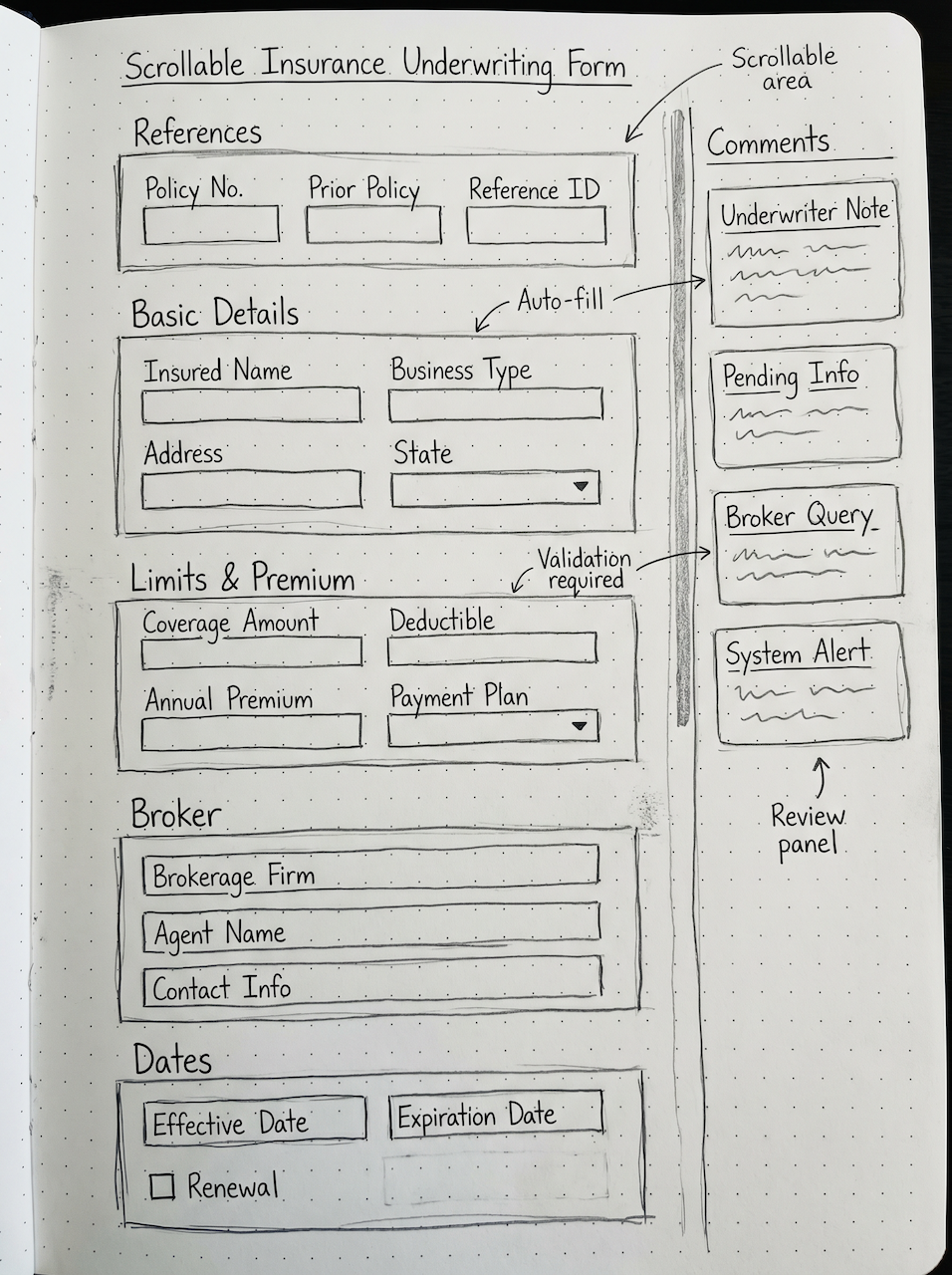
Before opening Figma, I sketched low-fidelity wireframes on paper to rapidly explore layout options for the core screens. These rough sketches allowed fast, focused conversations with stakeholders about layout, hierarchy, and workflow — catching structural issues before investing in high-fidelity design.
Dashboard Layout
Submission Hub
Document Review
Policy Review
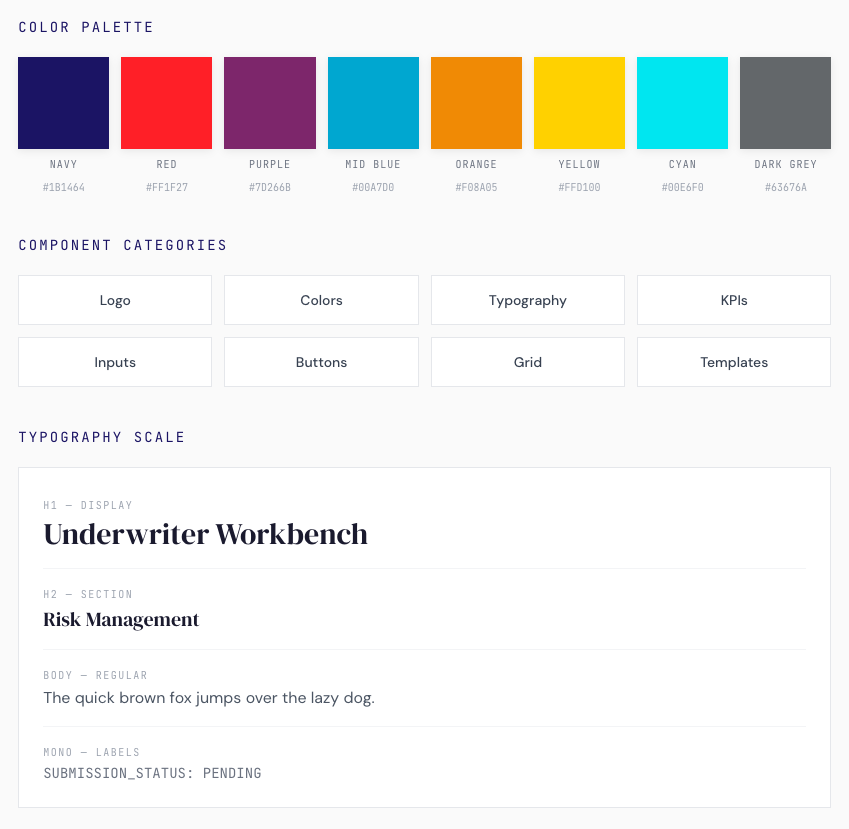
Design System
A scalable design language for 50+ screens
I built a comprehensive Design System UI Kit aligned with MS Amlin’s brand guidelines — defining the color palette, typography, input fields, button variants, grid systems, KPI charts, and page templates. This served as the bridge between design and engineering.
High-Fidelity - Dashboard
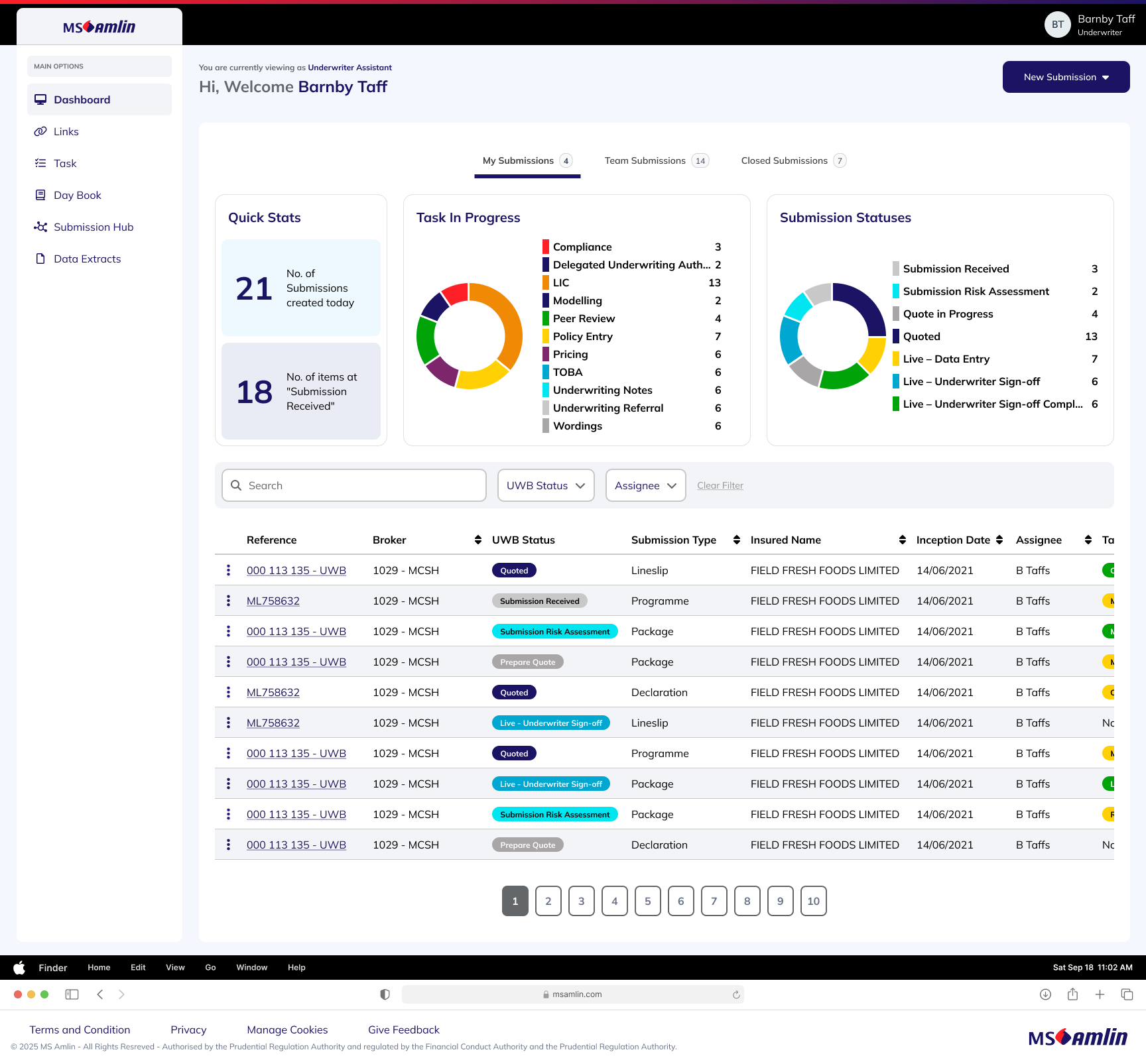
From sketches to a polished, data-rich dashboard
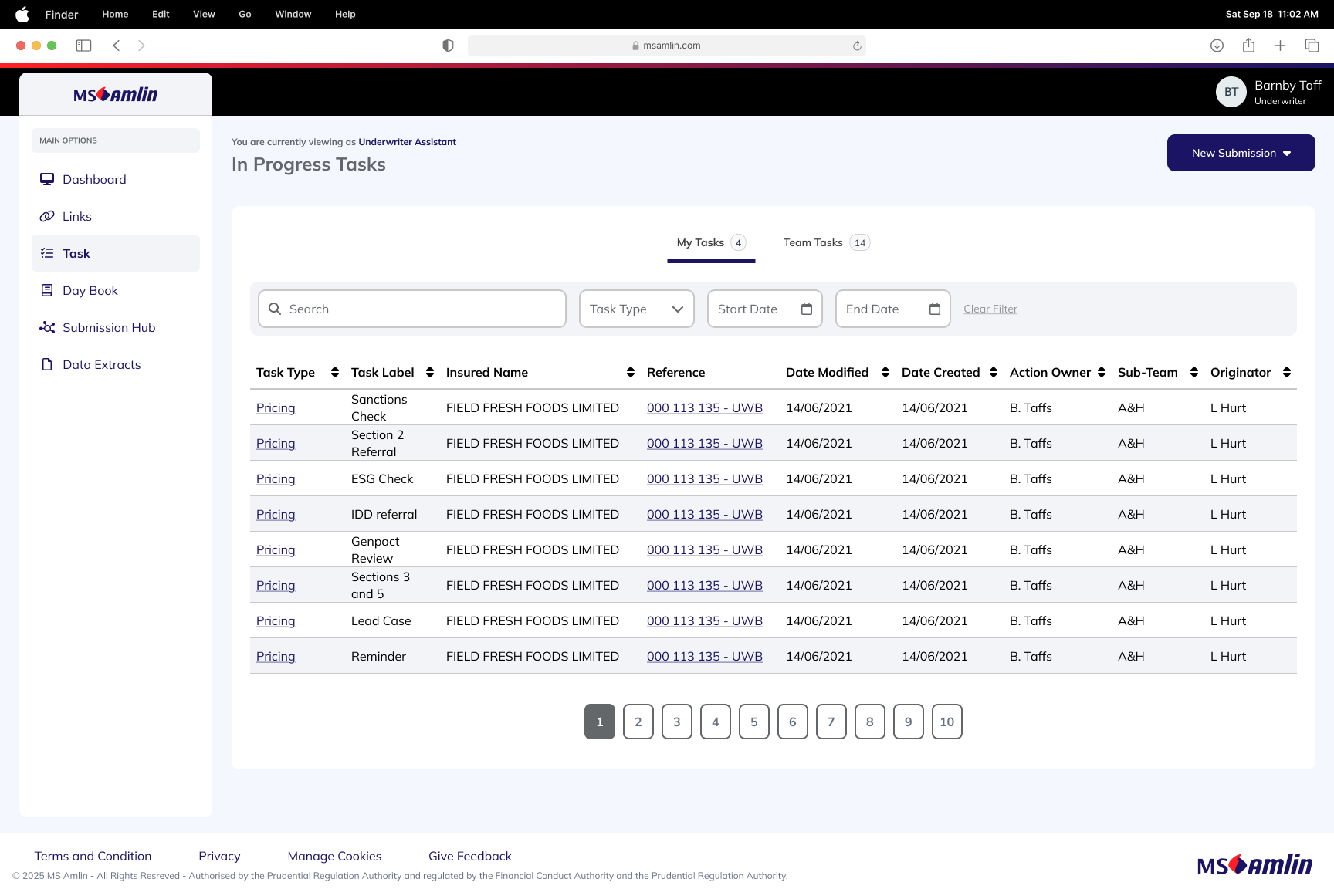
The Dashboard and Task Management screens were the underwriter’s home base — surfacing critical KPIs, active task lists, and quick access to submissions. The transition from rough paper sketches to pixel-perfect screens shows how early layout decisions carried through to the final design.
Paper Sketch
Final Dashboard
Task Management Screen
High-Fidelity - Submissions
Streamlining the document-heavy underwriting workflow
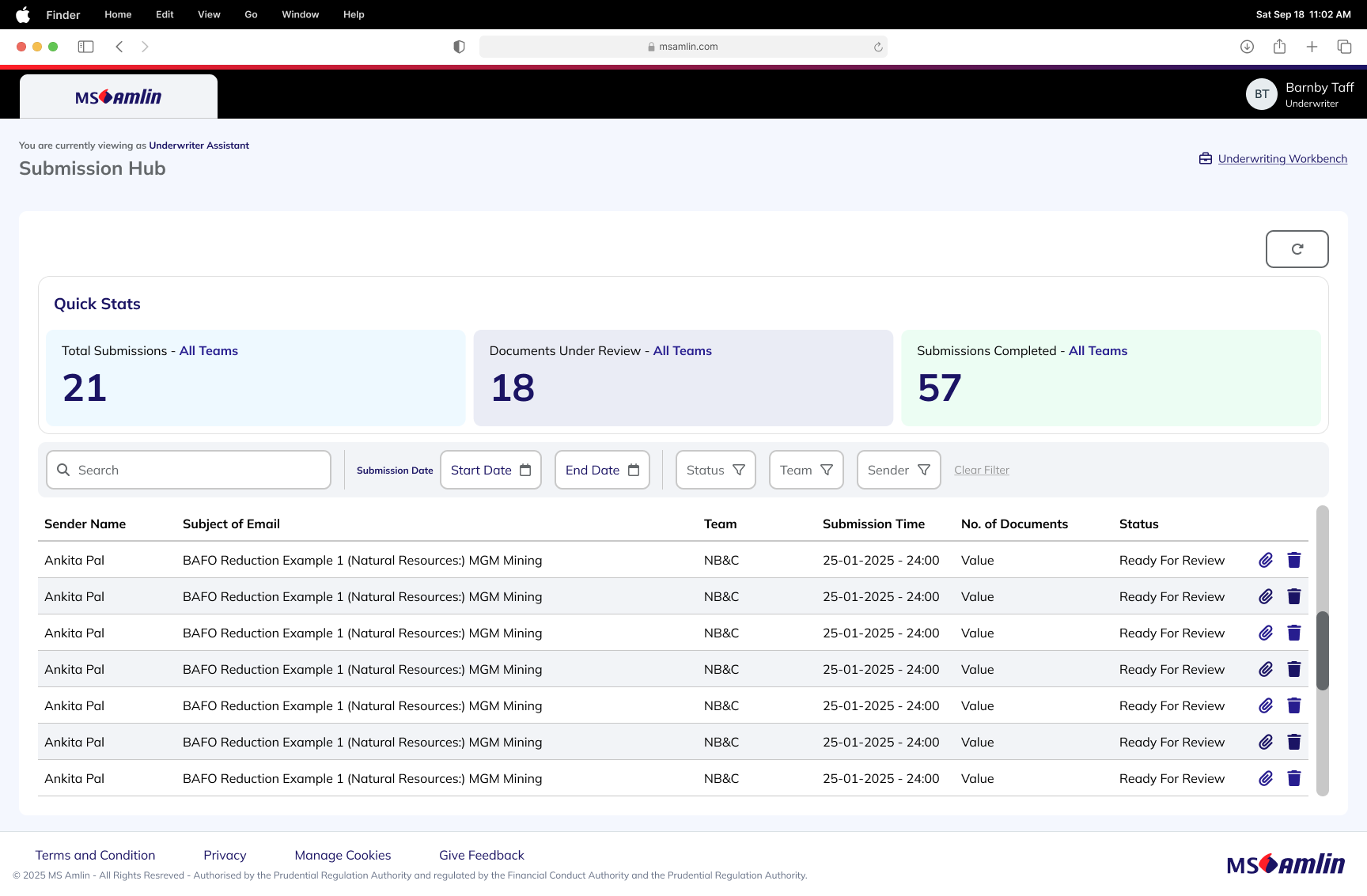
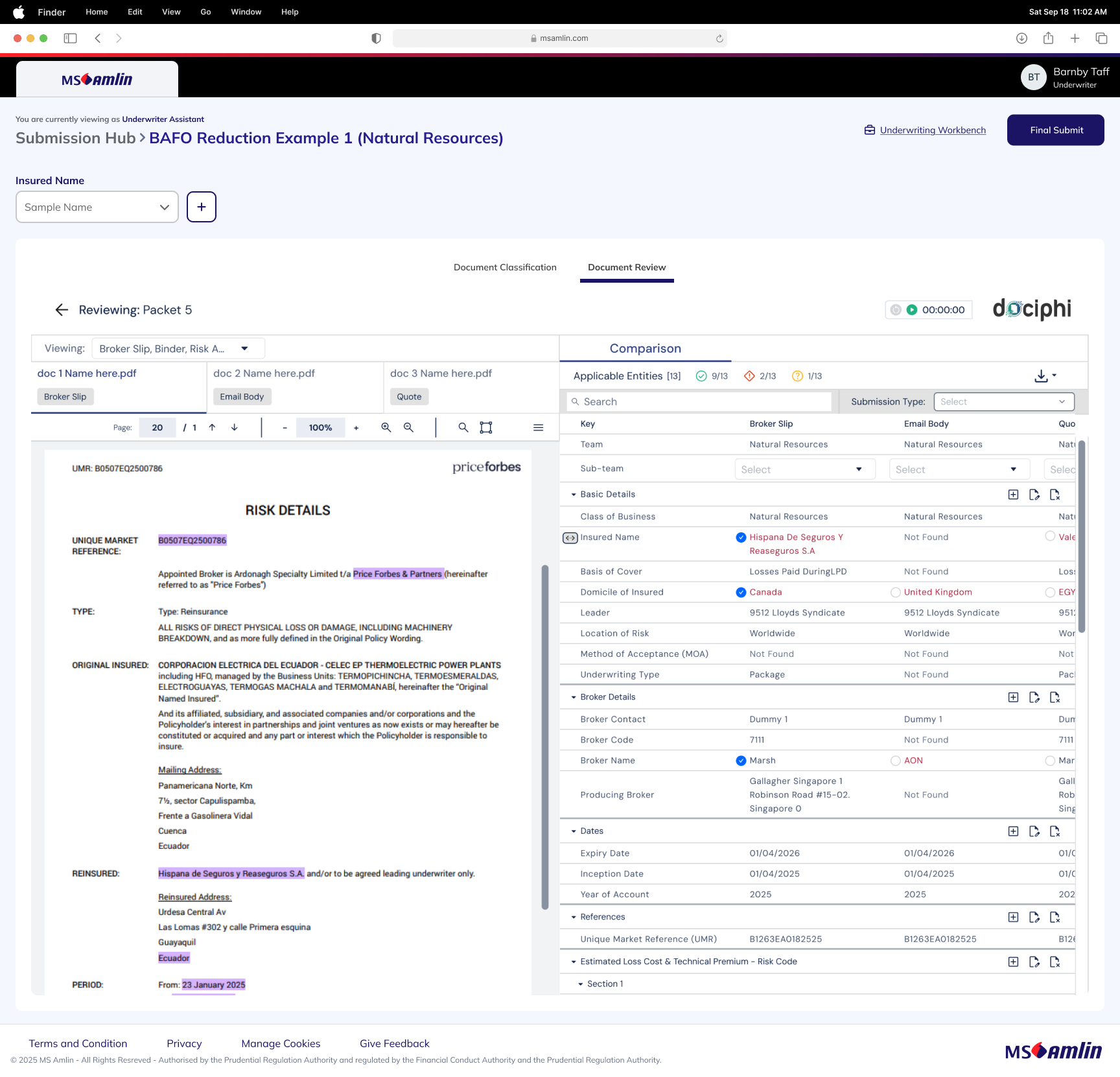
The Submission Hub handles high volumes of incoming submissions with powerful filtering. The Document Review screen uses a split-panel layout — showing the original document alongside extracted data for comparison. Both were designed to minimize context-switching and reduce cognitive load.
Paper Sketch
Final Submission Hub
Paper Sketch
High-Fidelity - Submissions
Final Document Review
High-Fidelity - Risk Management
Taming complex forms with clear hierarchy
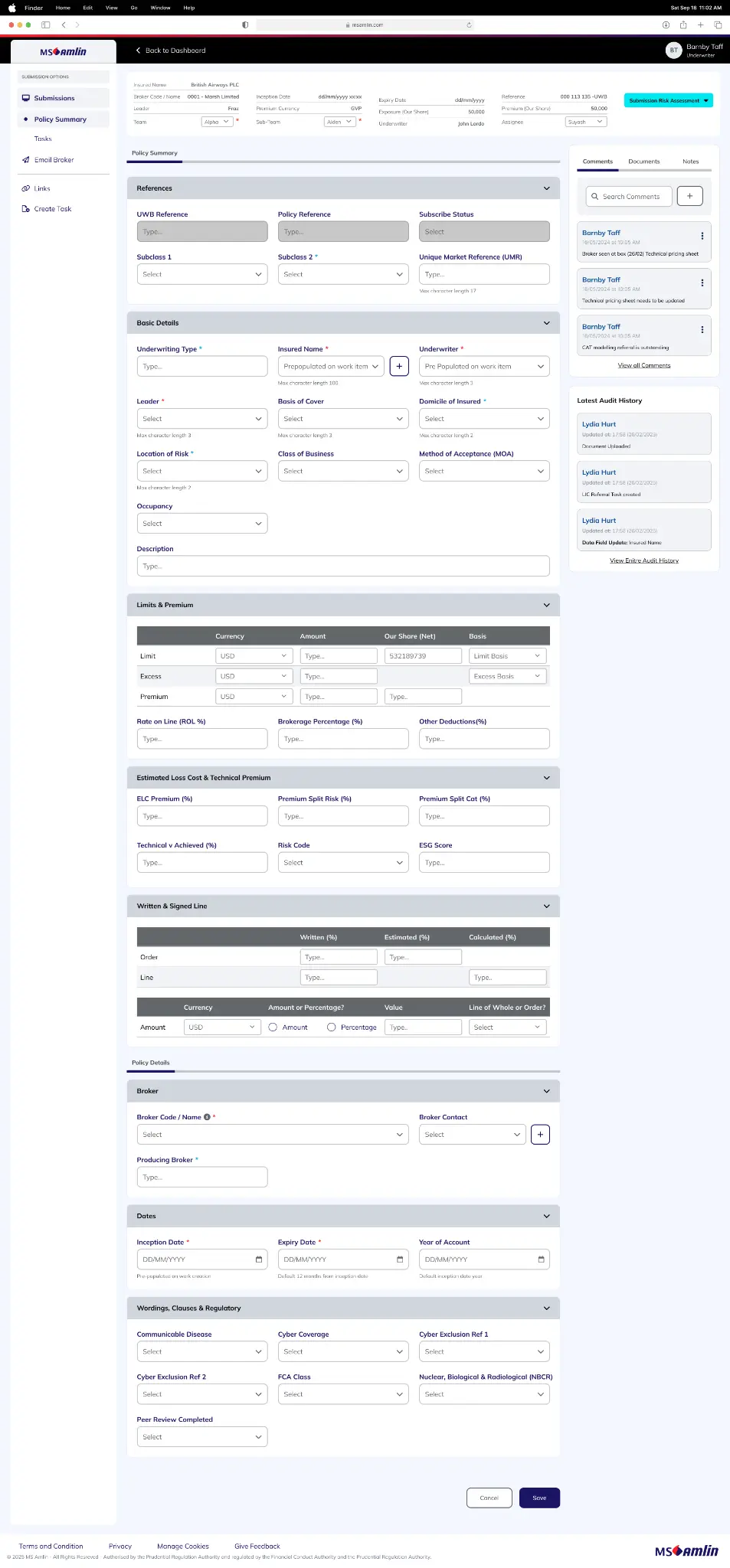
The Risk Management and Policy Information screens contained dense, form-heavy interfaces with dozens of fields. I organized these into logical groups with persistent comments panels for collaboration. Every detail was designed to reduce errors and speed up the underwriting decision process.
Paper Sketch
Final Policy Form
Document Management
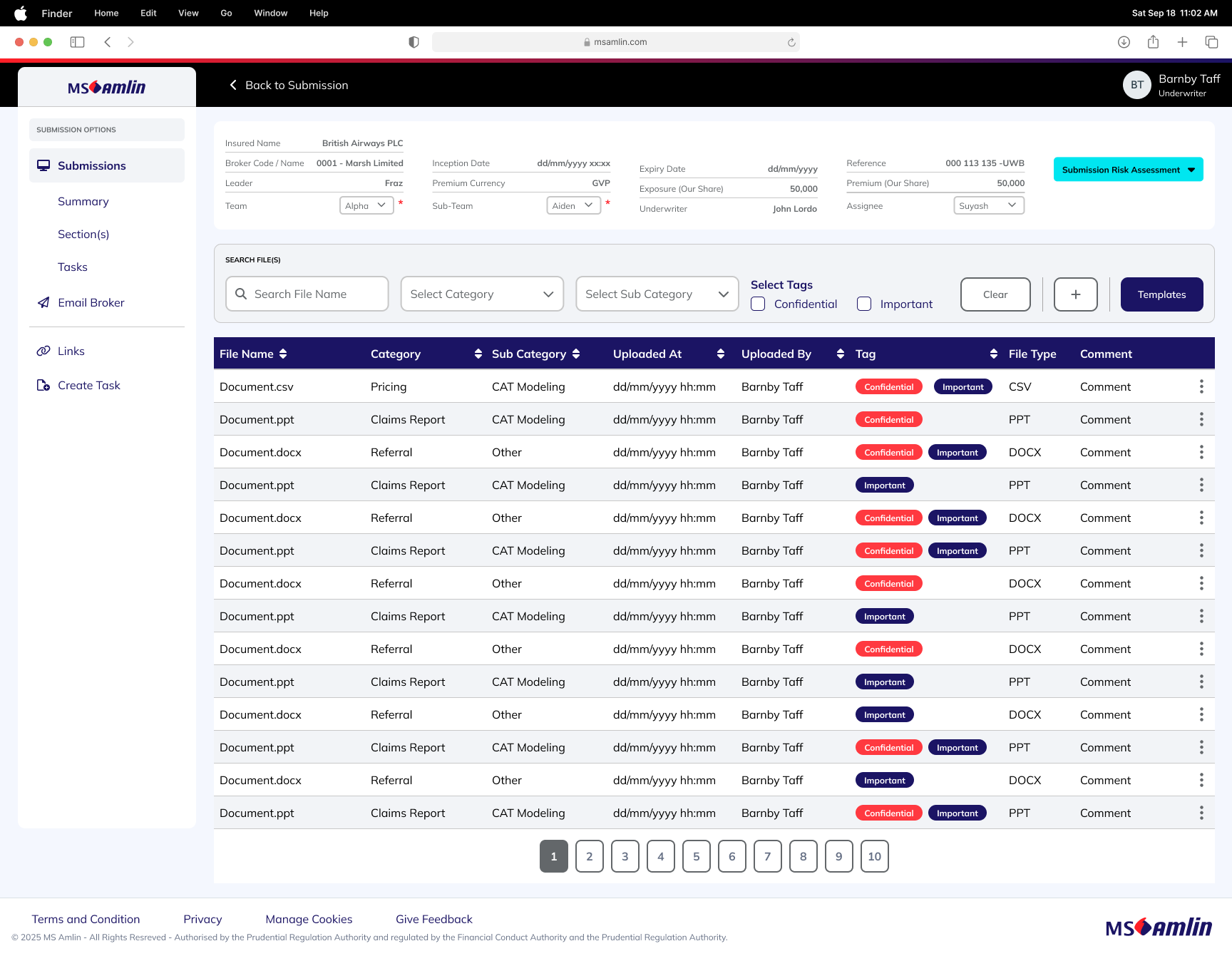
Referral Task
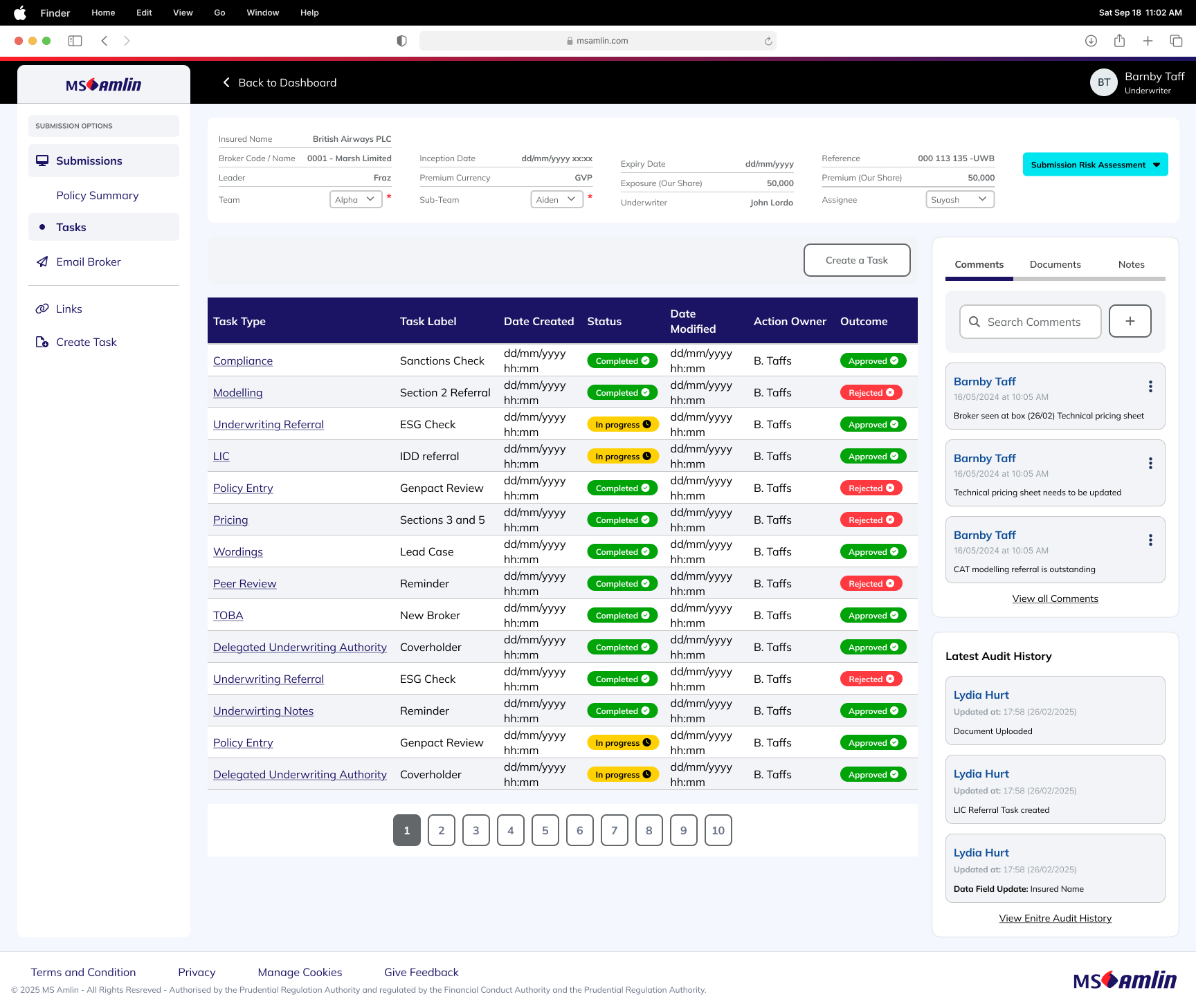
Impact & Reflection
A unified workbench that transformed how underwriters work
The Underwriter Workbench consolidated fragmented workflows into a single, role-based platform. By leading the UX process from initial sketches through a complete design system and high-fidelity prototypes, I helped MS Amlin create a tool that improved underwriter productivity and provided a scalable foundation for future features.
50+
Screens designed end-to-end
8
Design system component categories
3
Role-based experiences delivered
5+
Legacy tools consolidated into one
100%
Figma specs for seamless dev handoff
1
Comprehensive design system build